Meet Our Founders
Two friends. One reusable idea.
Before it was an engineering project, wristraw was a design decision: an accessory built to sit on your wrist all day, in any color, with any outfit. Here's where that decision came from.
Jorge Carpio and Jennifer Fuentes didn't set out to reinvent the straw. They set out to sell one — and the reinvention only happened once the data talked them out of their first idea.
The inspiration: how  got its start
About three years ago, Jorge and his business partner, Jennifer, landed on a straightforward business idea: sell straws — the traditional kind, the ones already sitting in every search result on Amazon. Before launching, they did what any careful founder does and started researching the category. What they found reframed the entire project. Nearly every reusable straw on the market, they realized, shared the same flaw: none of them were actually designed to be carried.
The numbers backed up the frustration. Global disposable straw use — not just in the United States, but worldwide — remained stubbornly high, and had climbed over time rather than dropped, even as the reusable straw market itself kept expanding and showed no signs of slowing down. Jorge and Jennifer kept circling the same question: if reusable alternatives were everywhere, why did plastic straw use keep rising?
The evolution: from a bracelet idea to a habit-forming accessory
The research pointed to something neither of them had expected going in. Most disposable straws aren't used at home — they're used out in the world, at restaurants, parties, trips, events. And most people, it turned out, already owned a reusable straw. It just never left the kitchen drawer. Even the compact, travel-sized straws that come in their own little case had the same failure mode: remember the case, find room for it in a pocket or a bag, and lose the habit the moment you switch pants or switch purses. Reusable straws didn't have an adoption problem. They had a carrying problem — and nobody wants to complicate their life just to avoid a plastic straw.
That reframing led to the real question: what do people carry around without ever having to think about it? Jorge and Jennifer found their answer in the accessories people never take off — bracelets, watches — the things worn in the shower, in the pool, in the ocean, without a second thought. If a straw could become one of those objects instead of one more thing to remember, the carrying problem would disappear on its own. That was the moment the idea for wristraw clicked: not a better straw to pack, but a straw you simply wear.
The approach: turning a bracelet into a straw
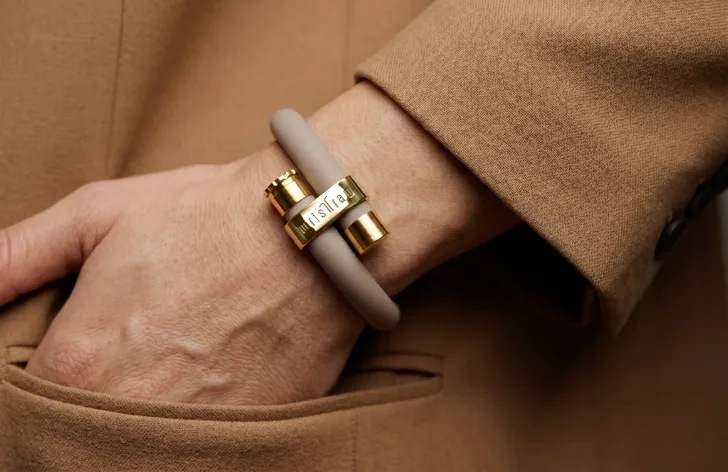
Turning that idea into a fully working product took almost three years, and more failed prototypes than either founder likes to count. The final design centers on high-quality, food-safe metal components and a high-grade food-safe silicone wrap — pieces engineered as much for how wristraw looks as for how it holds up to daily wear. A mechanism called Twist and Lock seals the straw's opening hermetically, so it can be showered in, swum in, or worn through a workout, while the inside stays fully isolated from any outside contamination. A small titanium hook, flexible enough to move naturally with the wrist, joins both ends of the straw and holds it snugly in place as a bracelet. Every piece was designed with a going-out outfit in mind, not just a water bottle — wristraw was built to feel as considered as the jewelry it sits next to.
The motivation: why we keep going
Behind the engineering is a simple motivation: build something people actually want to wear, every single day. wristraw's long-term goal hasn't changed since that first straw-selling idea three years ago. Jorge and Jennifer just found a very different way to get there, one where the accessory comes first. The sea turtle mascot has his own reason for being here. Meet Wris just below to hear it in his own words.
Three years in, wristraw is still just getting started. New colors, new bundles, and new ways to wear the idea are already on the way.